Out beyond all ideas
of right doing
and wrong doing
there is a field.
I'll meet you there.
-Rumi
Showing posts with label film. Show all posts
Showing posts with label film. Show all posts
Monday, December 04, 2006


Wit, Will and Walls; Putting the VFH Grant to Bed
 It has been a fast and fascinating year creating the short version of Wit, Will and Walls; my first foray into independent filmmaking in conjunction with Shenandoah University. The 15-minute first phase of the program is finished thanks to the Virginia Foundation for the Humanities for their research grant of $12,000.00.
I wondered what I would find when I took steps toward social issue documentaries beyond work-for-hire as a director/producer with mainstream broadcast and cable outlets. VFH was an amazing partner on this project; from their support during the grant writing process to the recent final phase of wrapping budget and reports. VFH focus on ideas and the history and culture of Virginia continues to be a huge inspiration and source of energy around a very challenging project.
Thanks specifically to:
Robert Vaughn, VFH President
Dr. David Bearinger, VFH Director, Grants and Public Programs
Tori Talbot, VFH Program Associate
Thank you to the talented filmmakers and actors who worked with me on the project:
 Sheila Smith, Director of Photography
Clai Lashley, Lighting Director
Ted Roth, Audio Recordist
Ahren Fehr, 2nd Camera
Theodore Snead, Actor
Tanesia Fisher, Actor
Kevin Matheson
Nick Matheson
Hallie Penwell
Cody Penwell, Production Associates
Javier Inon, Imaging Advisor
Thank you to Shenandoah University faculty and staff:
Dr. Tracy Fitzsimmons, Vice President of Academic Affairs
Bill Austin, The Knowledge Point History and Tourism Center Program Director
Dr. Warren Hofstra, Historian
Dr. James Bryant, Historian
Rick Ours, Director SUTV
Sandy Snyder, Grant Support
Sandy Snyder, Grant Support
Bonnie Miller, Production Support
 Thanks to the scholars who participated so eloquently in the public meeting:
 Dr. Deborah Lee, Independent Public Historian
Dr. Lisa Lindquist Dorr, Historian University of Alabama
Dr. Cynthia Fleming, Historian, University of Tennessee
Phyllis Slade Martin, Consulting Historian
Dr. Douglas Smith, Occidental College
Dr. Lauranett Lee, Virginia Historical Society
Ray Crawford, PhD Candidate in Political Science, Howard University, Performance Poet
And many, many thanks to the inspiring and insightful Betty Kilby Fisher and to her dynamic and supportive family.
So many people were generous with their support and their time on this project. So far we have tallied more than $31,000 in in-kind contributions.
Here are some excerpts from my final report:
The Public Meeting
The VFH grant fostered better understanding of the humanities in the public meeting by bringing together prominent humanities scholars from around the country to discuss the historic and current state of race, gender and integration in Virginia. The panel achieved that understanding through the examination of Betty Kilby Fisher’s story of being a plaintiff in the Supreme Court case to desegregate Warren County schools in the late 1950’s. The audience of about 20 members was active and responsive with comments and questions during the 4-hour meeting and the participants diverse and cohesive in their contributions to the discussion.
Radio and print media advanced the public meeting and the Northern Virginia Daily and The Winchester Star ran lengthy articles covering the meeting itself. I am pleased to note that the publisher of the Winchester Star is Harry T. Byrd, grandson of the Sen. Harry Byrd Sr., the architect of Massive Resistance. The Star has given this project ongoing and extensive press, including a sidebar to an August article about our reenactments titled “What was Massive Resistance?”.
Those who could not attend the public meeting are still able to watch C-SPAN-style coverage of it in four-30 minute shows that continue to air for one month per show on Winchester Community Television through the rest of 2006. These shows will be made available in the Shenandoah University Library and to anyone who has an interest in them. I will send copies of those to the VFH as soon as they finish airing.
The Promotional Reel
The Wit, Will and Walls project continued to receive press attention in the Winchester area and throughout Northern Virginia in early August when we shot recreations of a few scenes from Betty Kilby Fisher’s life for the promotional reel. Betty’s 16-year-old granddaughter Tanesia portrayed Betty with grace and maturity, veteran DC actor Theodore Snead, of PBS’s upcoming Prince Among Slaves, played Betty’s father and we shot on-location in period costumes at Warren County High School and at the Virginia State Arboretu m.
m.
The promo reel carries on where the public meeting left off; by promoting understanding of the humanities in the past and in the present by allowing the narrative of the Betty Kilby Fisher story to be told through the eyes and in the voice of these premiere humanities scholars on a DVD.
The promo reel was originally intended to run 5-minutes, but the material from the public meeting was so compelling that I created a mini-documentary which now runs 15-minutes in length.
I believe this short piece provides an opportunity beyond fundraising for the film to begin community dialogue about race and reconciliation by drawing an audience into a discussion about one individual’s experience. I have already pre-premiered the piece before a journalism class at the University of Richmond and in audience surveys students commented that they felt the piece was moving and that they wanted to know more about Betty’s story. I have also been invited to speak at the University of Tennessee on November 14th and at Virginia Commonwealth University before the end of the semester.
The VFH grant fostered better understanding of the humanities in the public meeting by bringing together prominent humanities scholars from around the country to discuss the historic and current state of race, gender and integration in Virginia. The panel achieved that understanding through the examination of Betty Kilby Fisher’s story of being a plaintiff in the Supreme Court case to desegregate Warren County schools in the late 1950’s. The audience of about 20 members was active and responsive with comments and questions during the 4-hour meeting and the participants diverse and cohesive in their contributions to the discussion.
Radio and print media advanced the public meeting and the Northern Virginia Daily and The Winchester Star ran lengthy articles covering the meeting itself. I am pleased to note that the publisher of the Winchester Star is Harry T. Byrd, grandson of the Sen. Harry Byrd Sr., the architect of Massive Resistance. The Star has given this project ongoing and extensive press, including a sidebar to an August article about our reenactments titled “What was Massive Resistance?”.
Those who could not attend the public meeting are still able to watch C-SPAN-style coverage of it in four-30 minute shows that continue to air for one month per show on Winchester Community Television through the rest of 2006. These shows will be made available in the Shenandoah University Library and to anyone who has an interest in them. I will send copies of those to the VFH as soon as they finish airing.
The Promotional Reel
The Wit, Will and Walls project continued to receive press attention in the Winchester area and throughout Northern Virginia in early August when we shot recreations of a few scenes from Betty Kilby Fisher’s life for the promotional reel. Betty’s 16-year-old granddaughter Tanesia portrayed Betty with grace and maturity, veteran DC actor Theodore Snead, of PBS’s upcoming Prince Among Slaves, played Betty’s father and we shot on-location in period costumes at Warren County High School and at the Virginia State Arboretu
 m.
m. The promo reel carries on where the public meeting left off; by promoting understanding of the humanities in the past and in the present by allowing the narrative of the Betty Kilby Fisher story to be told through the eyes and in the voice of these premiere humanities scholars on a DVD.
The promo reel was originally intended to run 5-minutes, but the material from the public meeting was so compelling that I created a mini-documentary which now runs 15-minutes in length.
I believe this short piece provides an opportunity beyond fundraising for the film to begin community dialogue about race and reconciliation by drawing an audience into a discussion about one individual’s experience. I have already pre-premiered the piece before a journalism class at the University of Richmond and in audience surveys students commented that they felt the piece was moving and that they wanted to know more about Betty’s story. I have also been invited to speak at the University of Tennessee on November 14th and at Virginia Commonwealth University before the end of the semester.
I will actively seek community and educational presentations for this piece and I will look to VFH and others for advice on how to do that effectively. As I mentioned, I hope to premiere the short piece in the Front Royal region at a traditionally black venue and perhaps at Warren County High School in Front Royal preferably during Black History Month of 2007.
I also feel this short piece will make an excellent companion to Betty Kilby Fisher’s book and I hope to distribute it through SU’s History and Tourism center website and through Betty Kilby Fisher’s company. I will also be seeking ideas and advice from VFH on distribution and after life of this short piece.
The Long-Form Documentary
The treatment and the shoot script are underway for the long-form documentary which SU intends to premiere in the fall of 2008; 50 years after the anniversary of the Supreme Court case which desegregated Warren County schools. The main objective that has emerged the course of this grant process is to find a way to make this historical documentary appealing and enlightening to a younger crowd. That means using contemporary footage, music and shooting techniques wherever possible, limiting the use of or stylizing any archival photos and footage. I point to HBO’s Iron Jawed Angels, Alex Gibney’s Academy Award-winning Enron: The Smartest Guys in the Room and Jeff Feuerzeig’s The Devil and Daniel Johnston as inspiration for the fresh style I hope to bring to the Betty Kilby Fisher documentary.
I believe appealing to a younger crowd also means adding another, younger main character such as Betty’s 16-year-old granddaughter Tanesia, who is thoughtful and mature and is able to bridge her family’s legacy of activism and resistance with modern day and often elusive challenges around racism.
Another consideration in reaching a younger audience is the delivery system of the documentary. A traditional broadcast of the piece will reach a certain mature demographic, and I am exploring other forms of delivery including YouTube, cell phone alerts, a website with podcasting and the festival circuit in order to reach the technologically sophisticated younger crowd. I will begin fundraising for the long form documentary around these objectives immediately.
Conclusion
Again, I would like to express my gratitude for including me in VFH’s grant process. I feel the public meeting and the short-form DVD have already begun to reach out and shift public awareness and perhaps they have begun to lay the groundwork for discussion, examination and hopefully reconciliation around race and misogyny that exists in communities across our country. My objectives are to continue to include and inform the public in every stage of creating this documentary, to reach out to a television audience in new and technologically savvy ways, to continue to build my relationship with the VFH around this project, and to ultimately create a fresh, inventive vehicle to educate an audience about how one story, specifically Betty Kilby Fisher’s story, can help us examine our history and the way we relate to each other in the present day.
Sincerely Yours,
Paulette Moore
Director/Producer Special Projects
SUTV
I also feel this short piece will make an excellent companion to Betty Kilby Fisher’s book and I hope to distribute it through SU’s History and Tourism center website and through Betty Kilby Fisher’s company. I will also be seeking ideas and advice from VFH on distribution and after life of this short piece.
The Long-Form Documentary
The treatment and the shoot script are underway for the long-form documentary which SU intends to premiere in the fall of 2008; 50 years after the anniversary of the Supreme Court case which desegregated Warren County schools. The main objective that has emerged the course of this grant process is to find a way to make this historical documentary appealing and enlightening to a younger crowd. That means using contemporary footage, music and shooting techniques wherever possible, limiting the use of or stylizing any archival photos and footage. I point to HBO’s Iron Jawed Angels, Alex Gibney’s Academy Award-winning Enron: The Smartest Guys in the Room and Jeff Feuerzeig’s The Devil and Daniel Johnston as inspiration for the fresh style I hope to bring to the Betty Kilby Fisher documentary.
I believe appealing to a younger crowd also means adding another, younger main character such as Betty’s 16-year-old granddaughter Tanesia, who is thoughtful and mature and is able to bridge her family’s legacy of activism and resistance with modern day and often elusive challenges around racism.
Another consideration in reaching a younger audience is the delivery system of the documentary. A traditional broadcast of the piece will reach a certain mature demographic, and I am exploring other forms of delivery including YouTube, cell phone alerts, a website with podcasting and the festival circuit in order to reach the technologically sophisticated younger crowd. I will begin fundraising for the long form documentary around these objectives immediately.
Conclusion
Again, I would like to express my gratitude for including me in VFH’s grant process. I feel the public meeting and the short-form DVD have already begun to reach out and shift public awareness and perhaps they have begun to lay the groundwork for discussion, examination and hopefully reconciliation around race and misogyny that exists in communities across our country. My objectives are to continue to include and inform the public in every stage of creating this documentary, to reach out to a television audience in new and technologically savvy ways, to continue to build my relationship with the VFH around this project, and to ultimately create a fresh, inventive vehicle to educate an audience about how one story, specifically Betty Kilby Fisher’s story, can help us examine our history and the way we relate to each other in the present day.
Sincerely Yours,
Paulette Moore
Director/Producer Special Projects
SUTV
Sunday, November 26, 2006
Clickstar Pushing Boundaries
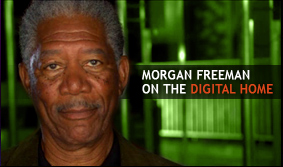 I recently posted about George Lucas getting out of the blockbuster film biz, while he continued to ponder online monetization. Then the guy from Guba featured in last month's Fast Company seemed to have some answers about dollars and downloads. Now comes Morgan Freeman - launching his new low budget film "10 Items or Less" in theaters December 1 and then on a brand new website called Clickstar; a venture between Freeman and Intel. Two weeks after the theatrical release, "10 Items..." will be available to download.
Gosh, just wait a little while and all that you wonder about the world shall be answered. This is great news for the independent filmmakker. Danny Devito is a partner on the documentary film side with his company called Jersey Docs.
Here are some news links to the story through Clickstar's website:
Here are some excerpts from Yahoo News, October 2006:
"It is a controversial issue, but (it) will increase the reach of the film and increase the efficiency of the marketing," Clickstar chief executive James Ackerman told Reuters. "I don't think we are going to adversely impact theater attendance."Ackerman bases his argument on the fact that movies such as "10 Items" are made on low budgets and often screen only in cities such as New York or Los Angeles. Web releasing gives fans in small U.S. towns and foreign cities access to films they otherwise would not see, not major movies such as "Spider-Man 3."
Excerpt from LA Times, October 2006:
Made for under $10 million and shot in just three weeks (Director Brad Silberling's "Lemony Snicket" filmed for a whopping 132 days), "10 Items or Less" is a small step for everyone involved, especially Intel. Besides its investment in ClickStar, Intel partially underwrote the "10 Items or Less" production budget by pre-buying the film's Internet rights.The movie, which runs a quick 82 minutes, stars Freeman as a fading actor researching a part about a grocery store manager.
The movie was filmed in practical locations around Southern California. There's hardly any production design or artificial lighting, and almost all of the camerawork is hand-held."I wanted this movie not to feel rushed," Silberling says. "I wanted to be able to find new things, discoveries, along the way."
But for all the convenience it offers, the technology offers more solutions for piracy prevention than anything else. The more quickly and easily movies are offered for legal downloading, the partners say, the fewer the people who will turn to illegal file sharing. "We see technology as an opportunity, not something to fear,"
Producing partner Lori McCreary says. "We want to make films that are easier to buy than to pirate. But it's a really fine line between giving the consumer as much freedom as possible and still having the studios comfortable that their copyright is protected."
Friday, November 24, 2006
Goodbye Robert Altman
 I don't always like Robert Altman's films, but they are invariably dense and ambitious and I never had the feeling Altman was calling it in, even his later years. The prolific director died at 81 of cancer this week, leaving behind a mixed legacy of impressively groundbreaking and/or
 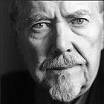 annoyingly messy films.
 I loved Altman's HBO television cross-over Tanner '88 written by Doonesbury creator Garry Trudeau. It took a fake presidential candidate on the real campaign trail with very droll results. The show had a reprise starring the same cast during the last prez election.
My favorite film was his 1992 inside Hollywood pic The Player - the pitch sessions are classic and hilarious. And Altman's irreverent take on characters running a mobile field hospital in Korea - M.A.S.H. was just so gritty, grim, and funny.
Friday, November 17, 2006
Guba Guy

Just another juicy bit from this month's Fast Company. 34-year-old Thomas McInerney is CEO and cofounder of Guba, based in San Francisco. Guba won the right to be the first independent company offering downloads of theatrical movies. Now Amazon and Apple have entered the market of first being competitive with the DVD with the hope of eventually eclipsing it.
http://www.fastcompany.com/magazine/110/fast-talk-mcinerney.html
http://www.guba.com/
Thursday, November 16, 2006
Life After Princess Leia
 Director George Lucas announced recently that he'll be quitting the blockbuster film biz and that the future lies in small films and Web distribution.
At a groundbreaking ceremony for his renamed alma mater, the School of Cinematic Art at University of Southern California, Lucas said spending $100 million on a making a film and another $100 million for marketing makes no sense.
"I think people are going to be drawn to a certain medium in their leisure time and they are going to do it because there is a desire to do it at that particular moment in time, " said Lucas. "Everything is going to be a matter of choice. I think that is going to be a huge revolution in the industry."
That being said, Indiana Jones 4 is still in development and intended to be released on the good old fashioned large screen. "We are not rushing in, we are trying to find out exactly where the monetization is coming from." Amen, brother.
Subscribe to:
Posts (Atom)
