Tuesday, February 27, 2007

Where's the Table?! Over There in Richmond!

I thought it was a joke from the Onion Newspaper when a colleague sent me a news clip saying civil rights leader Al Sharpton's forebearers were slaves owned by Strom Thurmond's family, a longtime segregationist. Apparently it's true.

It seems, however, that the Sharptons and the Thurmonds won't be taking any lessons of transcendance from Betty Kilby Fisher and Phoebe Kilby along the lines of sitting down together at the table, as Dr. Martin Luther King dreamed.

http://www.nytimes.com/2007/02/26/nyregion/26sharpton.html

Mr. Sharpton said he had not heard from the Thurmonds and had no immediate plans of contacting them. “This is not family,” he said firmly. “This is property.”

Amazingly, some transcendance on race issues is coming out of Richmond, Virginia - former capitol of the Confederacy. The Virginia state legislature issued an apology over the weekend for the state's past history of slavery. The Old Dominion becomes the first southern state to formally acknowledge its role through legislative channels. The measure also expressed regret for the state's treatment of Native Americans.


The resolution was introduced as Virginia begins its celebration of the 400th anniversary of Jamestown, where the first Africans arrived in 1619. Richmond, home to a popular boulevard lined with statues of Confederate heroes, later became another point of arrival for Africans and a slave-trade hub.
In Virginia, black voter turnout was suppressed with a poll tax and literacy tests before those practices were struck down by federal courts, and state leaders responded to federally ordered school desegregation with a "Massive Resistance" movement in the 1950s and early '60s. Some communities created exclusive whites-only schools.

Among those voting for the measure was Delegate Frank D. Hargrove, an 80-year-old Republican who infuriated black leaders last month by saying "black citizens should get over" slavery.

Sunday, February 25, 2007

Audience Feedback From WWW Screening

Here are comments from those who attended the Wit, Will and Walls screenings from 2/17 and 2/18. These link to the posting about the screenings below. I will add to these as more come in - so please feel free to send me your comments:

Jill Finsen, Artist and Non Profit Policy Staff - It was remarkable that Wit, Will and Walls brought together relatives of a former slave and slave owner—a significant meeting as told by both of these women. Wit, Will and Walls allows us to better appreciate what was a remarkably courageous and threatening experience for those who led the way. Thanks to those who participated 50 years ago and to those who continue to keep the story alive to improve relations for today and the future.

David Sheon, President PR Firm - After hearing those stories, I appreciate more how deep the emotional scars, the systematic disenfranchisement, and the cultural deprivation caused by white society's raping of black society must still hurt.

Consider that Kilby's great grandmother - if I've guessed the generations correctly - could well have been a slave attacked/raped by the slave owner. Somehow I doubt it was love behind that! So the wheels were put in motion from that point on to create a person who would not be "at home" anywhere.

Then the well documented systematic and "legal" closure of the high school, the brutal attack, and the social alienation of Kilby by her peers, educators, and courts brings the ignorance/hate/intolerance to another generation. The story of being constantly attacked by spitballs, and then being sent to detention because she had the nerve to complain about it - is such good imagery, and so painful for us all to hear.

Reconciliation is a much higher hurdle than I ever realized, but we're fortunate to be living at a time when courageous people are beginning to poke their heads out from dark closets. The heroes of our day come in all colors, ages, shapes and sizes.

Kris Larsen, TV Director, Producer -When Betty Kilby Fisher told her story of reconciliation and introduced her "cousin" Ms. Phoebe Kilby, she pointed out that "we are living Dr. Matin Luther King's dream" -- I doubt there was a dry eye in the place! Also, involving young filmmakers to tell Tanesia's story is a brilliant move - the stories, and the whole evening, unfolded beautifully. Epic!

Dr. Ann Denkler, SU Historian - The best part of the events was the venue of the church. The film, the church, and the community just fit together perfectly. I also think that your film brings out the need to know history, to reconcile racially, and, most importantly, to celebrate these two things. It's as if one shouldn't simply try to understand racism and the horrors of segregation without looking at how the African American community wants to see it dealt with. And, clearly, it should be looked at as a celebration of healing.

Bob Burke, SU Director of Corporate Relations - For me the story is not historical but a part of who I am. I remember segregation in Southern Missouri and how stupid I though it was and how disturbing it was for me that white adults in my church could support the idea including my parents. One of the reasons I gave up going to church. The only time my father and I had a physical altercation was over segregation. It was a pretty good fight, I was 16.

M. Tyson Gilpin, Attorney - I attended the screenings of “Wit Will and Walls” at two different places. First, at the home of Tracy Fitzsimmons in Reliance, VA and second, at Mt. Carmel Church in Winchester, VA. Despite the fact that the audiences were from completely different backgrounds the reactions were the same. The audiences were powerfully moved by the coming together and triumph of Betty Kilby Fisher and her granddaughter to tell the story. In addition, both the white Kilbys and the African American Kilbys were in both audiences. The spontaneous bonding within the greater Kilby “family” at both events was inspiring.

Dr. Warren Hofstra, SU Historian -What hit me the hardest about Betty’s story and your work together is how much it lives today. Betty’s story begins 50 years ago, but what you and Betty have to say about race and reconciliation for the present is very powerful. That power was very evident in Sunday’s premiere.

Patsy Moore, Secretary, My Mom - I was very impressed with the words from Dr. Deborah Lee, the public historian, as she stressed that movements survive and much is accomplished when they are faith and spirit motivated. We linked arms and concluded with "WE SHALL OVERCOME". I know this film will evolve into a full hour-long documentary. Motives are correct and God will bless.

Sheila Smith, Director of Photography -The thing that struck me most was the courageous reunion between the grandaughter of the slave owner and Betty. Only when meetings like this happen can reconciliation and healing begin. And I was touched my the anguish of Betty's father, having to sacrifice his daughter's safety and innocence to send her into the school to "earn" the education which he was deprived.

Also, I was encouraged my the documentary made by the younger generation. It seems they really understood the hardship Betty's generation had to endure so that their descendant's could have a better life and with that realization comes the responsibility of both races of today's generation to continue the work needed for our society to move towards racial equality.

Dr. James Bryant II, SU Historian - Betty Kilby Fisher's story is a testament of how faith and perserverance can overcome seemingly insurmountable obstacles. She gives us lessons for life.

Claiborne Lashley, Lighting Director - I have been in the film industry since 1983; worked on 30+ feature films. John Sayles, Clint Eastwood, Jodie Foster, Ivan Rittman… Whoop Goldberg, Julia Roberts, James Earl Jones, Tom Cruise…many others.

That’s Hollywood; I prefer Betty and Paulette.

Through their vision and interpretation we come face to face with an issue that is haunting yet we see that a nightmare can become a dream. To be identified with a project like Wit, Will and Walls means to give something to our culture that is poignant and educational.

Betty’s story needs to be shouted from the mountaintop.

Saturday, February 24, 2007

Wit, Will and Walls - the Shenandoah Valley Screenings

It has been an amazing month of gearing up for and screening Wit, Will and Walls; the Betty Kilby Fisher Story in 2 public venues. We were scheduled for three, but a wintery blast of glacial ice across the Shenandoah Valley last week conspired to keep us out of Warren County High School, the historic location where Betty Kilby Fisher was the infant plaintiff to desegregate the county's schools. Look for that screening, with some special guests, to be rescheduled in March or later this spring.

The lead-up to the weekend was the round of press in Winchester and Front Royal with Betty and me. The most intriguing interview was with Dan McDermott of The Valley Today radio show. It was on this show that Betty revealed that she had kept the fact that she had been raped in Warren Couny High School auditorium a secret from her mother until last Wednesday. Her mother's response after 50 years? She simply said quietly "So it's true."

This has been a terrifying experience for Betty to work through, but telling the truth of it when she has been ready has been cathartic for her and healing for others. Dan was a sensitive and insightful interviewer - lots of trust there for Betty to share her story. A link to the interview:

And a link to the companion story in Dan's independent newspaper The Warren County Report (Dan is the hardest working man in media today) http://warrencountyreport.com/kilby.pdf

On Saturday night 2/17 we screened at Old Reliance Theater, in Reliance, VA. Shenandoah University Vice President Tracy Fitzsimmons and her husband Dr. Chuck Call live upstairs in this refurbished schoolhouse - and their basement is a theater where ambitious social issue theater productions like The Laramie Project and The Vagina Monologues have been staged with great success. A few hightlights:

I was proud to screen the SU student piece about Betty's granddaughter, Tanesia. Tanesia portrayed her grandmother in my film. Sibling teams Nick and Kevin Matheson and Hallie and Cody Penwell worked VERY hard to profile Tanesia and her take on her family's legacy with touching results.
During discussion after the screenings, a woman named Phoebe Kilby from Harrisonburg, VA announced that she's done preliminary research and believes that her family was the Kilby slaveholder and Betty's family were the slaves! She felt that by contacting Betty that they together would be able to live out Dr. Martin Luther King Jr.'s dream of the daughters of the slaves and slaveholders sitting down together at the table. Betty's family has already taken to calling her "cousin Phoebe"!
Not at all ironically, but sort of startlingly Phoebe Kilby works with Eastern Mennonite University in Harrisonburg. EMU's Center for Justice and Peacebuilding hosts a project called Coming to the Table, which gathers and documents the stories of the descendents of slaves and slaveholders.

An NPR story about the Coming to... project:

On Sunday 2/18 we screened at the wonderful Mt. Carmel Baptist Church in Winchester, VA. What an afternoon of discussion and truths. When the discussion was over, all in the church linked arms and sang "We Shall Overcome". Thank you Pastor Gilbert Mack, Linda Jackson and the congregation from Mt. Carmel for welcoming us to your beautiful venue. I look forward to more collaboration... and singing!

Friday, February 02, 2007

More Illuminating Content From AU's Documentary Seminar

Repurpose. Recyle, Reinvent. These are the key points I took away from the 2nd day of American University's Making Documentaries Matter Seminar. Gone are the days when the documentary filmmaker toiled behind the production curtain for months or even years before rolling out the BIG PICTURE for one stunning night of broadcast, and then retreated back into the nether worlds of research and pre-production to begin the cycle all over again.

Today's production landscape is a rolling line of output and smaller milestones that reaches to community and partners for feedback all along the way to present in multiple platform and venues; community screenings, festivals, broadcast, cable, deep cable, deeper cable, websites, file sharing sites cellphones, house parties.

For me it's not news, just validation of the process that has already begun in my work which is tremendously helpful. The panels were too comprehensive and varied to do justice to them in my tiny blog, but below are a few random thoughts. The Center for Social Media does a tremendous job of documenting the whole event on DVD and on their website. Anyone who is remotely interested in the state of non-fiction filmmaking needs to put this seminar on the top of their to do lists.
RANDOM EXCERPTS:
-More gasps from the audience than the cell phone that you can shoot and edit on:
Jean Seoh of Arts Engine - an advocacy group on the participatory media panel showed a heart-stopping short film about the devastating effects of racism with the film A Girl Like Me which shows an experiment where black children are asked to chose between white and black dolls. You can find that on YouTube and the Media that Matters website.
-I couldn't imagine this job existed!:
Katerina Ciznek, Filmmaker-in-Residence, St. Michaels Hospital in Toronto. Katerina was on a panel about participatory media but I became obsessed with the concept of her job. Soooo - this woman was appointed by the Canadian government to go and hang out in Canada's premiere hospital to create projects like an art photo blog about pregnant teens and flash films about a day in the life of a health care worker so that the hospital could effectively advocate for issues that need attention. I am still trying to get my brain around this one but I think it is fantastic.
-New Media Word of the Day: What is a bit torrent?
I don't know, but my sense is we all better figure it out. It has something to do with a technology that allows users downloading the same video clip to share the "load" (my word) of the information so that the more people who view the clip, the better the quality of the clip. I could also be completely wrong. I looked it up on Wikipedia, but it is written in some kind of Vulcan dialect that I can't follow.

Thursday, February 01, 2007

Gasps from Documentary Audience At American University

At American University this week for their always-excellent "Making Your Documentary Matter" seminar sponsored by the Center for Social Media. This group addresses the current and varied issues for independent filmmakers focused on using media for social change.


Among the stunning array of speakers from the first symposium - Benjamin Walker of PBS's We Shall Remain - a massive American Experience project to document Native American history which will take up nearly half the broadcast season in 2009 -


Walker comes from the new media initiatives for this project and the audience gasped and applauded when he revealed that he will help arm thousands of native americans in Arizona with an unbelievable new Nokia phone which will have video capture and EDITING capability built-in. They will gather video over the course of one year and document their American Experience on a PBS website. Wow.

The phone is N93 which costs around $700 with Carl Zeiss optics and memory cards with built in instructional videos on how to shoot quality video.


All of the speakers speak of cell phones as the 4th screen - the follow-on to theater, television and compter screens.

More to follow as the conference progresses!

Monday, December 18, 2006

Suddenly, the Poet

THE DEAD
The dead are always looking down on us, they say
while we are putting on our shoes or making a sandwich,
They are looking down through the
glass-bottom boats
of heaven
as they row themselves slowly through eternity.

Garrison Keillor's sublime radio show Prairie Home Companion featured from New York City this week Billy Collins, the 44th U.S. Poet Laureate and professor of English composition at New York City College. Fans of Collins cheer that he is the first Poet Laureate since Robert Frost to enjoy both critical and popular acclaim. Since I tend to be over-exuberant about things that interest me, I will spare you the descriptors and simply let you decide.

http://www.bigsnap.com/g-nyt01.html

"This lament for the diminished audience is a soap opera, a 'Little Match Girl' of high culture. To me that's ridiculous because the facts are that good poetry is exorbitantly rewarded with grants, travel, fame and positions in universities that were unthinkable 20 years ago. It's a wild time to be a poet." says Collins.

JAPAN
Today I pass the time reading
a favorite haiku,
saying the few words over and over.
It feels like eating
the same small, perfect grape
again and again
I walk through the house reciting it
and leave its letters falling
through the air of every room.
I stand by the big silence of the piano and say it.
I say it in front of a painting of the sea.
I tap out its rhythm on an empty shelf.
I listen to myself saying it,
then I say it without listening,
then I hear it without saying it.
And when the dog looks up at me,
I kneel down on the floor
and whisper it into each of his long white ears.
It’s the one about the one-ton
temple bell
with the moth sleeping on the surface,
and every time I say it, I feel the excruciating
pressure of the moth
on the surface of the iron bell.
When I say it at the window,
the bell is the world
and I am the moth resting there.
When I say it into the mirror,
I am the heavy bell
and the moth is life with its papery wings.
And later, when I say it to you in the dark,
you are the bell,
and I am the tongue of the bell, ringing you,
and the moth has flown
from its line
and moves like a hinge in the air above our bed.

http://www.bigsnap.com/linklibrary.html#poembypoem

"Poetry is my cheap means of transportation," Mr. Collins said. "By the end of the poem the reader should be in a different place from where he started. I would like him to be slightly disoriented at the end, like I drove him outside of town at night and dropped him off in a cornfield. There is a wonderfully self-entertaining aspect to all of this. You feel delightfully insane in a way, slipping the bonds of logic."

TENSION

“Never use the word suddenly just to
create tension.” —Writing Fiction

Suddenly, you were planting some yellow petunias
outside in the garden,
and suddenly I was in the study
looking up the word oligarchy for the thirty-seventh time.
When suddenly, without warning,
you planted the last petunia in the flat,
and I suddenly closed the dictionary
now that I was reminded of that vile form of governance.
A moment later, we found ourselves
standing suddenly in the kitchen
where you suddenly opened a can of cat food
and I just as suddenly watched you doing that.
I observed a window of leafy activity
and, beyond that, a bird perched on the edge
of the stone birdbath
when suddenly you announced you were leaving
to pick up a few things at the market
and I stunned you by impulsively
pointing out that we were getting low on butter
and another case of wine would not be a bad idea.
Who could tell what the next moment would hold?
Another drip from the faucet?
Another little spasm of the second hand?
Would the painting of a bowl of pears continue
to hang on the wall from that nail?
Would the heavy anthologies remain on their shelves?
Would the stove hold its position?
Suddenly, it was anyone’s guess.
The sun rose ever higher.
The state capitals remained motionless on the wall map
when suddenly I found myself lying on a couch
where I closed my eyes and without any warning
began to picture the Andes, of all places,
and a path that led over the mountain to another country
with strange customs and eye-catching hats
suddenly fringed with little colorful, dangling balls.

Thursday, December 14, 2006

Wit, Will and Walls - Save the Date

Lend your voice to an historic documentary by participating in 2 public premieres of Wit, Will and Walls; the Betty Kilby Fisher Story. Presented by SUTV and The Knowledge Point.

February 16, Warren County High School, Front Royal

February 18, Mt. Carmel Baptist Church, Winchester

SU graduate Betty Kilby Fisher was just 13-years-old when she became a plaintiff to desegregate Warren County Schools in 1958. The activism that her family embraced and the subsequent violence they endured for their beliefs shaped Betty's life and the lives of those around her. After decades of facing racism and misogyny that brought on rage and depression, Betty now embraces her role as an African American elder whose incredible story leads us on a path to recognition and reconciliation.

Specific times TBD.

Mean People...

Okay, so those who know me understand that I am not opposed to the occasional affront to gentility, nor the well-placed bomblette to civility. But I believe David Pogue is right-on in today's NYTimes blog in calling for a time-out in both online grammer gnashing and etiquette bashing.

http://pogue.blogs.nytimes.com/

Here is an excerpt:

Slashdot and Digg.com are extremely popular sites for tech fans. Each discussion begins with the presentation of an article or Web page–and then opens up the floor for discussion.

Lately, an increasing number of the discussions devolve into name-calling and bickering. Someone might submit, say, this item to Digg:

685 diggs. “AWESOME astronomy poem.” (posted by MetsFan 3 days ago)
Twinkle, twinkle, little star, how I wonder what you are.Up above the world so high, like a diamond in the sky,Twinkle, twinkle, little star, how I wonder what you are.


Before long, the people’s feedback begins, like this:
by baddude on 12/11/06
What’s yr problem, moron. You already said it’s a star, why would you then wonder what it is. Get a clue, or a life.


by neverland2 on 12/11/06
Dugg down as inaccurate. Stars do not twinkle. It’s the shifting atmosphere that causes an apparent twinkle. Or were you stoned all through science class?


by mrobe on 12/11/06
yo neverland2–It’s a poem, idiot. Nobody’s claiming that stars twinkle. Ever heard of poetic license?


Honestly, the intellectual level of you people is right up there with a gnat’s.

…and so on.

Monday, December 04, 2006

More Wisdom...

Out beyond all ideas
of right doing
and wrong doing
there is a field.

I'll meet you there.

-Rumi

Wit, Will and Walls; Putting the VFH Grant to Bed

It has been a fast and fascinating year creating the short version of Wit, Will and Walls; my first foray into independent filmmaking in conjunction with Shenandoah University. The 15-minute first phase of the program is finished thanks to the Virginia Foundation for the Humanities for their research grant of $12,000.00.

I wondered what I would find when I took steps toward social issue documentaries beyond work-for-hire as a director/producer with mainstream broadcast and cable outlets. VFH was an amazing partner on this project; from their support during the grant writing process to the recent final phase of wrapping budget and reports. VFH focus on ideas and the history and culture of Virginia continues to be a huge inspiration and source of energy around a very challenging project.


Thanks specifically to:

Robert Vaughn, VFH President
Dr. David Bearinger, VFH Director, Grants and Public Programs
Tori Talbot, VFH Program Associate


Thank you to the talented filmmakers and actors who worked with me on the project:
Sheila Smith, Director of Photography
Clai Lashley, Lighting Director
Ted Roth, Audio Recordist
Ahren Fehr, 2nd Camera
Theodore Snead, Actor
Tanesia Fisher, Actor
Kevin Matheson
Nick Matheson
Hallie Penwell
Cody Penwell, Production Associates
Javier Inon, Imaging Advisor


Thank you to Shenandoah University faculty and staff:
Dr. Tracy Fitzsimmons, Vice President of Academic Affairs
Bill Austin, The Knowledge Point History and Tourism Center Program Director
Dr. Warren Hofstra, Historian
Dr. James Bryant, Historian
Rick Ours, Director SUTV
Sandy Snyder, Grant Support
Bonnie Miller, Production Support


Thanks to the scholars who participated so eloquently in the public meeting:

Dr. Deborah Lee, Independent Public Historian
Dr. Lisa Lindquist Dorr, Historian University of Alabama
Dr. Cynthia Fleming, Historian, University of Tennessee
Phyllis Slade Martin, Consulting Historian
Dr. Douglas Smith, Occidental College
Dr. Lauranett Lee, Virginia Historical Society
Ray Crawford, PhD Candidate in Political Science, Howard University, Performance Poet

And many, many thanks to the inspiring and insightful Betty Kilby Fisher and to her dynamic and supportive family.

So many people were generous with their support and their time on this project. So far we have tallied more than $31,000 in in-kind contributions.


Here are some excerpts from my final report:

The Public Meeting

The VFH grant fostered better understanding of the humanities in the public meeting by bringing together prominent humanities scholars from around the country to discuss the historic and current state of race, gender and integration in Virginia. The panel achieved that understanding through the examination of Betty Kilby Fisher’s story of being a plaintiff in the Supreme Court case to desegregate Warren County schools in the late 1950’s. The audience of about 20 members was active and responsive with comments and questions during the 4-hour meeting and the participants diverse and cohesive in their contributions to the discussion.

Radio and print media advanced the public meeting and the Northern Virginia Daily and The Winchester Star ran lengthy articles covering the meeting itself. I am pleased to note that the publisher of the Winchester Star is Harry T. Byrd, grandson of the Sen. Harry Byrd Sr., the architect of Massive Resistance. The Star has given this project ongoing and extensive press, including a sidebar to an August article about our reenactments titled “What was Massive Resistance?”.

Those who could not attend the public meeting are still able to watch C-SPAN-style coverage of it in four-30 minute shows that continue to air for one month per show on Winchester Community Television through the rest of 2006. These shows will be made available in the Shenandoah University Library and to anyone who has an interest in them. I will send copies of those to the VFH as soon as they finish airing.


The Promotional Reel

The Wit, Will and Walls project continued to receive press attention in the Winchester area and throughout Northern Virginia in early August when we shot recreations of a few scenes from Betty Kilby Fisher’s life for the promotional reel. Betty’s 16-year-old granddaughter Tanesia portrayed Betty with grace and maturity, veteran DC actor Theodore Snead, of PBS’s upcoming Prince Among Slaves, played Betty’s father and we shot on-location in period costumes at Warren County High School and at the Virginia State Arboretum.


The promo reel carries on where the public meeting left off; by promoting understanding of the humanities in the past and in the present by allowing the narrative of the Betty Kilby Fisher story to be told through the eyes and in the voice of these premiere humanities scholars on a DVD.

The promo reel was originally intended to run 5-minutes, but the material from the public meeting was so compelling that I created a mini-documentary which now runs 15-minutes in length.

I believe this short piece provides an opportunity beyond fundraising for the film to begin community dialogue about race and reconciliation by drawing an audience into a discussion about one individual’s experience. I have already pre-premiered the piece before a journalism class at the University of Richmond and in audience surveys students commented that they felt the piece was moving and that they wanted to know more about Betty’s story. I have also been invited to speak at the University of Tennessee on November 14th and at Virginia Commonwealth University before the end of the semester.
I will actively seek community and educational presentations for this piece and I will look to VFH and others for advice on how to do that effectively. As I mentioned, I hope to premiere the short piece in the Front Royal region at a traditionally black venue and perhaps at Warren County High School in Front Royal preferably during Black History Month of 2007.

I also feel this short piece will make an excellent companion to Betty Kilby Fisher’s book and I hope to distribute it through SU’s History and Tourism center website and through Betty Kilby Fisher’s company. I will also be seeking ideas and advice from VFH on distribution and after life of this short piece.


The Long-Form Documentary

The treatment and the shoot script are underway for the long-form documentary which SU intends to premiere in the fall of 2008; 50 years after the anniversary of the Supreme Court case which desegregated Warren County schools. The main objective that has emerged the course of this grant process is to find a way to make this historical documentary appealing and enlightening to a younger crowd. That means using contemporary footage, music and shooting techniques wherever possible, limiting the use of or stylizing any archival photos and footage. I point to HBO’s Iron Jawed Angels, Alex Gibney’s Academy Award-winning Enron: The Smartest Guys in the Room and Jeff Feuerzeig’s The Devil and Daniel Johnston as inspiration for the fresh style I hope to bring to the Betty Kilby Fisher documentary.

I believe appealing to a younger crowd also means adding another, younger main character such as Betty’s 16-year-old granddaughter Tanesia, who is thoughtful and mature and is able to bridge her family’s legacy of activism and resistance with modern day and often elusive challenges around racism.

Another consideration in reaching a younger audience is the delivery system of the documentary. A traditional broadcast of the piece will reach a certain mature demographic, and I am exploring other forms of delivery including YouTube, cell phone alerts, a website with podcasting and the festival circuit in order to reach the technologically sophisticated younger crowd. I will begin fundraising for the long form documentary around these objectives immediately.

Conclusion

Again, I would like to express my gratitude for including me in VFH’s grant process. I feel the public meeting and the short-form DVD have already begun to reach out and shift public awareness and perhaps they have begun to lay the groundwork for discussion, examination and hopefully reconciliation around race and misogyny that exists in communities across our country. My objectives are to continue to include and inform the public in every stage of creating this documentary, to reach out to a television audience in new and technologically savvy ways, to continue to build my relationship with the VFH around this project, and to ultimately create a fresh, inventive vehicle to educate an audience about how one story, specifically Betty Kilby Fisher’s story, can help us examine our history and the way we relate to each other in the present day.


Sincerely Yours,


Paulette Moore
Director/Producer Special Projects
SUTV

College Leaders Blog

NYTimes article today about how college presidents approach blogging. Some play it safe, some tackle political issues. All who blog feel it is part of creating a buzz around their universities and opening a direct line to their students.

Some lawyers say blogging for presidents is insane - that off-the-cuff remarks can easily become a legal nightmare, but many feel it is worth the risk.

http://www.nytimes.com/2006/11/22/education/22blogs.html?ex=1321851600&en=5e051c744a2c0b60&ei=5088&partner=rssnyt&emc=rss


Dr. Patricia McGuire of Washington DC's Trinity University blogs about how Representative Nancy Pelosi, class of 1962, who will be the first female speaker of the House; about election results; about breaking ground for a memorial to the Rev. Dr. Martin Luther King Jr.; and about lesbian alumnae and the Roman Catholic Church, sensitive ground for a Catholic undergraduate college serving mostly minority and low-income women.

Dr. McGuire wrote that the church’s rejection of same-sex unions did not mean that the “alma mater must shun her own daughters.” She added, “All alumnae are welcome at Trinity, always.”

At Towson University, outside Baltimore, the president, Robert L. Caret, who writes Bob’s Blog, appears online in sunglasses, casually unshaven and smiling gamely alongside the Towson Tiger mascot. Dr. Caret’s blog, though, plays it safe, mostly praising particular programs like summer courses or studying abroad, or urging students to join clubs and to help spruce up the campus.

New age. Apply groovy tools with caution.

Words of Wisdom

A Zen saying I read in the magazine Shambhala Sun today that made me laugh out loud.

Open mouth, already big mistake.

Sunday, November 26, 2006

Clickstar Pushing Boundaries

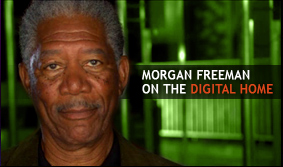
I recently posted about George Lucas getting out of the blockbuster film biz, while he continued to ponder online monetization. Then the guy from Guba featured in last month's Fast Company seemed to have some answers about dollars and downloads. Now comes Morgan Freeman - launching his new low budget film "10 Items or Less" in theaters December 1 and then on a brand new website called Clickstar; a venture between Freeman and Intel. Two weeks after the theatrical release, "10 Items..." will be available to download.


Gosh, just wait a little while and all that you wonder about the world shall be answered. This is great news for the independent filmmakker. Danny Devito is a partner on the documentary film side with his company called Jersey Docs.
Here are some news links to the story through Clickstar's website:

Here are some excerpts from Yahoo News, October 2006:

"It is a controversial issue, but (it) will increase the reach of the film and increase the efficiency of the marketing," Clickstar chief executive James Ackerman told Reuters. "I don't think we are going to adversely impact theater attendance."Ackerman bases his argument on the fact that movies such as "10 Items" are made on low budgets and often screen only in cities such as New York or Los Angeles. Web releasing gives fans in small U.S. towns and foreign cities access to films they otherwise would not see, not major movies such as "Spider-Man 3."

Excerpt from LA Times, October 2006:

Made for under $10 million and shot in just three weeks (Director Brad Silberling's "Lemony Snicket" filmed for a whopping 132 days), "10 Items or Less" is a small step for everyone involved, especially Intel. Besides its investment in ClickStar, Intel partially underwrote the "10 Items or Less" production budget by pre-buying the film's Internet rights.The movie, which runs a quick 82 minutes, stars Freeman as a fading actor researching a part about a grocery store manager.

The movie was filmed in practical locations around Southern California. There's hardly any production design or artificial lighting, and almost all of the camerawork is hand-held."I wanted this movie not to feel rushed," Silberling says. "I wanted to be able to find new things, discoveries, along the way."

But for all the convenience it offers, the technology offers more solutions for piracy prevention than anything else. The more quickly and easily movies are offered for legal downloading, the partners say, the fewer the people who will turn to illegal file sharing. "We see technology as an opportunity, not something to fear,"

Producing partner Lori McCreary says. "We want to make films that are easier to buy than to pirate. But it's a really fine line between giving the consumer as much freedom as possible and still having the studios comfortable that their copyright is protected."

Rock, Paper, Scissors, Passion

I've been trying to figure out what is so compelling to me about the New Jersey Rock, Paper, Scissors champ featured in today's NYTimes.


Perhaps it is the extreme "zennishness" of finding mastery in the micro.


Perhaps it is the brave defense of the banal.


Whatever the reason - the profile of 24-yar-old Bryan Bennet seems a perfect blog for a languid Sunday.

http://select.nytimes.com/2006/11/26/nyregion/26towns.html

A few excerpts:

Of this we can be sure: Rock smashes scissors. Scissors cut paper. Paper covers rock.

Beyond that, all is a mystery of feint, instinct and indirection, a dimension not only of sight and sound but of mind. Or so it goes in the world of Bryan Bennett, the newest member of the New Jersey sports pantheon after battling his way to a plucky second-place finish over 500 competitors this month in the World Rock Paper Scissors Championship in Toronto.

Mr. Bennett offers guidance but no easy truths. Jocks and meatheads like to start with rock. Women are often partial to scissors. More ethereal types prefer paper. That’s fine, except that if everyone knows this, it no longer applies.

It helps to know some of the famous patterns: fistful of dollars (rock, paper, paper); paper dolls (paper, scissors, scissors), or the full-bore machismo of avalanche (rock, rock, rock).

“It is not about predicting what your opponent will throw; it is about predicting what your opponent predicts you will throw," says Bennett.

Friday, November 24, 2006

Goodbye Robert Altman

I don't always like Robert Altman's films, but they are invariably dense and ambitious and I never had the feeling Altman was calling it in, even his later years. The prolific director died at 81 of cancer this week, leaving behind a mixed legacy of impressively groundbreaking and/or annoyingly messy films.

I loved Altman's HBO television cross-over Tanner '88 written by Doonesbury creator Garry Trudeau. It took a fake presidential candidate on the real campaign trail with very droll results. The show had a reprise starring the same cast during the last prez election.
My favorite film was his 1992 inside Hollywood pic The Player - the pitch sessions are classic and hilarious. And Altman's irreverent take on characters running a mobile field hospital in Korea - M.A.S.H. was just so gritty, grim, and funny.


Tuesday, November 21, 2006

Meet Metacafe

Metacafe is an Isreali video-sharing site with its sights set on surpassing YouTube, the web-based superpower that Google just bought for a kajillion dollars. What's Metcafe have that YouTube does not? Standards and incentives for contributors, according to Metacafe co-founder Arik Czerniak.

To start, those who upload videos can explicitly license their content to Metacafe and in return get paid $5 for every 1,000 views. During a recent trial run, Joe Eigo, a martial artist from Toronto, made $23,000 with a video of his acrobatic flips and kicks.

Here is an excerpt from The Economist about the site and how they control video quality:

Like YouTube, Metacafe makes money by selling advertising on its site. But unlike its rival, it makes an effort to choose and promote “good” videos on its home page. First, it rejects duplicates (about half of submissions). Then it uses 100,000 volunteers as film critics—just as Wikipedia, the free online encyclopedia, uses volunteers to write and vet articles. As a third filter, Metacafe then analyses the clips with its VideoRank algorithm, which crunches all sorts of metrics (whether viewers watch a clip to the end, for instance) in order to rank them—rather as Google's famous PageRank algorithm ranks web-search results.

Whether Metacafe's stuff is any good is entirely subjective, of course. Much of the content its volunteers and its algorithm approve is soft porn, and a lot, as on YouTube, violates copyright. But the system does produce statistics that are roughly the inverse of YouTube's: about 90% of the clips viewed are in the statistical “head”, not the “tail”—ie, they are popular clips featured on the home page. Counting all views, YouTube is ten times bigger than Metacafe, says Mr Czerniak, who recently moved his company's headquarters from Tel Aviv to San Francisco; but counting only views of the top 200 videos on each site, Metacafe wins by a whisker.

Here is the Metacafe site:

Friday, November 17, 2006

The Incredible Misadventures of Madeline Lightfoot

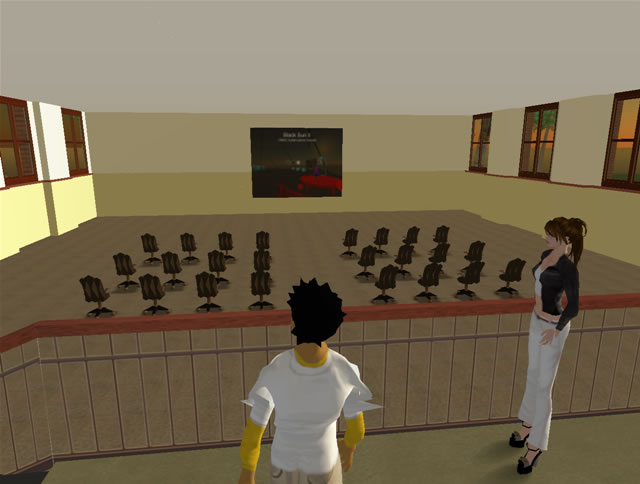
I've been muddling my way through the aforementioned Second Life this past week and it's been enthralling and mostly frustrating.

The first day I learned to walk, point, talk and fly on Orientation Island and then it was off to a number of unfathomable and hard-to-navigate neighborhoods. I wandered through boring beach communities and passed by a lot of goth sex clubs. I've been looking for the universities that reportedly do business there. I found the coordinates for Glidden University - but the campus was completely dark and I could not find the main building. Come to find out, the buildings are 600 feet in the air! Gosh! Those crazy avatars.

Then came several computer crashes. Pshhhhhhh. That is the sound of my excitement deflating.

I just found some articles on SimTeach that profile the top 20 educational locations in Second Life and their locations. This should help.


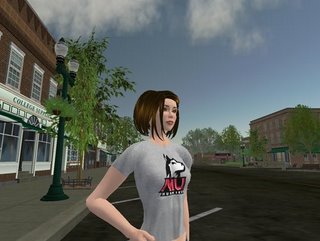
Here's a blog from Ali Andrews, the woman is building the Glidden virtual campus. http://aliandrews.blogspot.com/2006_01_01_aliandrews_archive.html. And here's Ali in Second Life:


I will check these out tomorrow. And perhaps Madeline Lightfoot will have more exciting adventures to report. Ooo - and I just noticed several places to hone my Second Life Skills. Stay tuned.

Guba Guy


Just another juicy bit from this month's Fast Company. 34-year-old Thomas McInerney is CEO and cofounder of Guba, based in San Francisco. Guba won the right to be the first independent company offering downloads of theatrical movies. Now Amazon and Apple have entered the market of first being competitive with the DVD with the hope of eventually eclipsing it.

http://www.fastcompany.com/magazine/110/fast-talk-mcinerney.html
http://www.guba.com/

Thursday, November 16, 2006

Free to Be Media


Fast Company quotes tech reporter Kevin Kelly this week saying in the future all media will be free - we will only pay for functionality and personalization. This in an article about the future of newspapers. http://www.fastcompany.com/resources/innovation/watson/091806.html

Wit, Will and Walls at University of Tennessee

Here in Knoxville, TN this week to pre-pre-premiere the 15-minute version of Wit, Will and Walls to Dr. Cynthia Fleming's graduate class in African American Studies. Dr. Fleming has written extensively on the civil rights movement of the '60s, is the author of Soon We Will Not Cry: The Liberation of Ruby Doris Smith Robinson and was one of the scholars featured in the film. A good class with thoughtful feedback. Here are some of their comments:

"Powerful. This piece is good at presenting the civil rights movement as a broad, multi-dimensional movement."

"Excellent focus on micro, personal story. An amazing source for an amazing account."


"The reenactments were wonderful."


"Show us more storyline, more reenactments, more background."


"It would be good to get the white (students) perspective."


http://www.highlandercenter.org/default.asp

The second half of class was spent at Highlander Research and Education Center in New Market, TN which was and still is a key organization for cultivating social movements in the U.S. Rosa Parks was there planning strategies six months before she was arrested, Dr. Martin Luther King spent time there. Highlander has dealt with coal mining issues, sea island literacy programs, and now has a focus on immigration issues.


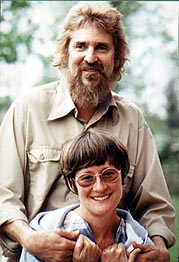
We were fortunate to have been hosted by Guy and Candie Carawan; principals at Highlander, musicians and long-time activists. What a privilege to have walked around the site where such important human rights work has been fostered and to meet this dynamic couple that have been witnesses and catalysts to history.

Thank you, Dr. Fleming.


http://digitalstudio.ucr.edu/studio_projects/carawan/default.html