Sunday, November 26, 2006

Clickstar Pushing Boundaries

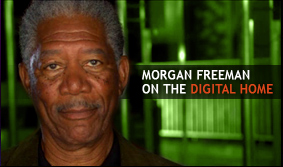
I recently posted about George Lucas getting out of the blockbuster film biz, while he continued to ponder online monetization. Then the guy from Guba featured in last month's Fast Company seemed to have some answers about dollars and downloads. Now comes Morgan Freeman - launching his new low budget film "10 Items or Less" in theaters December 1 and then on a brand new website called Clickstar; a venture between Freeman and Intel. Two weeks after the theatrical release, "10 Items..." will be available to download.


Gosh, just wait a little while and all that you wonder about the world shall be answered. This is great news for the independent filmmakker. Danny Devito is a partner on the documentary film side with his company called Jersey Docs.
Here are some news links to the story through Clickstar's website:

Here are some excerpts from Yahoo News, October 2006:

"It is a controversial issue, but (it) will increase the reach of the film and increase the efficiency of the marketing," Clickstar chief executive James Ackerman told Reuters. "I don't think we are going to adversely impact theater attendance."Ackerman bases his argument on the fact that movies such as "10 Items" are made on low budgets and often screen only in cities such as New York or Los Angeles. Web releasing gives fans in small U.S. towns and foreign cities access to films they otherwise would not see, not major movies such as "Spider-Man 3."

Excerpt from LA Times, October 2006:

Made for under $10 million and shot in just three weeks (Director Brad Silberling's "Lemony Snicket" filmed for a whopping 132 days), "10 Items or Less" is a small step for everyone involved, especially Intel. Besides its investment in ClickStar, Intel partially underwrote the "10 Items or Less" production budget by pre-buying the film's Internet rights.The movie, which runs a quick 82 minutes, stars Freeman as a fading actor researching a part about a grocery store manager.

The movie was filmed in practical locations around Southern California. There's hardly any production design or artificial lighting, and almost all of the camerawork is hand-held."I wanted this movie not to feel rushed," Silberling says. "I wanted to be able to find new things, discoveries, along the way."

But for all the convenience it offers, the technology offers more solutions for piracy prevention than anything else. The more quickly and easily movies are offered for legal downloading, the partners say, the fewer the people who will turn to illegal file sharing. "We see technology as an opportunity, not something to fear,"

Producing partner Lori McCreary says. "We want to make films that are easier to buy than to pirate. But it's a really fine line between giving the consumer as much freedom as possible and still having the studios comfortable that their copyright is protected."

Rock, Paper, Scissors, Passion

I've been trying to figure out what is so compelling to me about the New Jersey Rock, Paper, Scissors champ featured in today's NYTimes.


Perhaps it is the extreme "zennishness" of finding mastery in the micro.


Perhaps it is the brave defense of the banal.


Whatever the reason - the profile of 24-yar-old Bryan Bennet seems a perfect blog for a languid Sunday.

http://select.nytimes.com/2006/11/26/nyregion/26towns.html

A few excerpts:

Of this we can be sure: Rock smashes scissors. Scissors cut paper. Paper covers rock.

Beyond that, all is a mystery of feint, instinct and indirection, a dimension not only of sight and sound but of mind. Or so it goes in the world of Bryan Bennett, the newest member of the New Jersey sports pantheon after battling his way to a plucky second-place finish over 500 competitors this month in the World Rock Paper Scissors Championship in Toronto.

Mr. Bennett offers guidance but no easy truths. Jocks and meatheads like to start with rock. Women are often partial to scissors. More ethereal types prefer paper. That’s fine, except that if everyone knows this, it no longer applies.

It helps to know some of the famous patterns: fistful of dollars (rock, paper, paper); paper dolls (paper, scissors, scissors), or the full-bore machismo of avalanche (rock, rock, rock).

“It is not about predicting what your opponent will throw; it is about predicting what your opponent predicts you will throw," says Bennett.

Friday, November 24, 2006

Goodbye Robert Altman

I don't always like Robert Altman's films, but they are invariably dense and ambitious and I never had the feeling Altman was calling it in, even his later years. The prolific director died at 81 of cancer this week, leaving behind a mixed legacy of impressively groundbreaking and/or annoyingly messy films.

I loved Altman's HBO television cross-over Tanner '88 written by Doonesbury creator Garry Trudeau. It took a fake presidential candidate on the real campaign trail with very droll results. The show had a reprise starring the same cast during the last prez election.
My favorite film was his 1992 inside Hollywood pic The Player - the pitch sessions are classic and hilarious. And Altman's irreverent take on characters running a mobile field hospital in Korea - M.A.S.H. was just so gritty, grim, and funny.


Tuesday, November 21, 2006

Meet Metacafe

Metacafe is an Isreali video-sharing site with its sights set on surpassing YouTube, the web-based superpower that Google just bought for a kajillion dollars. What's Metcafe have that YouTube does not? Standards and incentives for contributors, according to Metacafe co-founder Arik Czerniak.

To start, those who upload videos can explicitly license their content to Metacafe and in return get paid $5 for every 1,000 views. During a recent trial run, Joe Eigo, a martial artist from Toronto, made $23,000 with a video of his acrobatic flips and kicks.

Here is an excerpt from The Economist about the site and how they control video quality:

Like YouTube, Metacafe makes money by selling advertising on its site. But unlike its rival, it makes an effort to choose and promote “good” videos on its home page. First, it rejects duplicates (about half of submissions). Then it uses 100,000 volunteers as film critics—just as Wikipedia, the free online encyclopedia, uses volunteers to write and vet articles. As a third filter, Metacafe then analyses the clips with its VideoRank algorithm, which crunches all sorts of metrics (whether viewers watch a clip to the end, for instance) in order to rank them—rather as Google's famous PageRank algorithm ranks web-search results.

Whether Metacafe's stuff is any good is entirely subjective, of course. Much of the content its volunteers and its algorithm approve is soft porn, and a lot, as on YouTube, violates copyright. But the system does produce statistics that are roughly the inverse of YouTube's: about 90% of the clips viewed are in the statistical “head”, not the “tail”—ie, they are popular clips featured on the home page. Counting all views, YouTube is ten times bigger than Metacafe, says Mr Czerniak, who recently moved his company's headquarters from Tel Aviv to San Francisco; but counting only views of the top 200 videos on each site, Metacafe wins by a whisker.

Here is the Metacafe site:

Friday, November 17, 2006

The Incredible Misadventures of Madeline Lightfoot

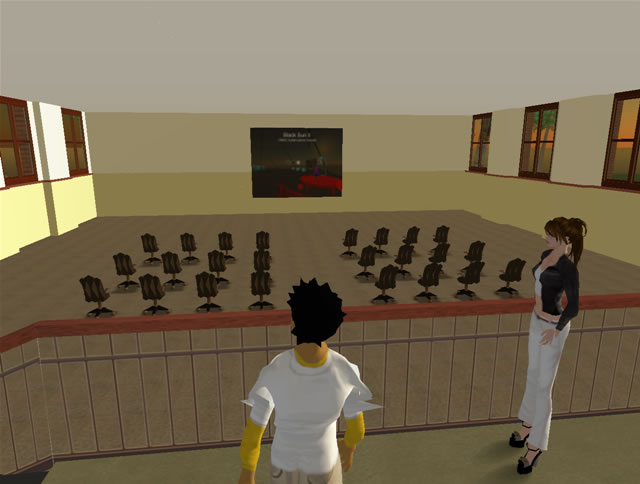
I've been muddling my way through the aforementioned Second Life this past week and it's been enthralling and mostly frustrating.

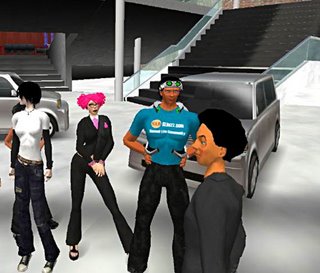
The first day I learned to walk, point, talk and fly on Orientation Island and then it was off to a number of unfathomable and hard-to-navigate neighborhoods. I wandered through boring beach communities and passed by a lot of goth sex clubs. I've been looking for the universities that reportedly do business there. I found the coordinates for Glidden University - but the campus was completely dark and I could not find the main building. Come to find out, the buildings are 600 feet in the air! Gosh! Those crazy avatars.

Then came several computer crashes. Pshhhhhhh. That is the sound of my excitement deflating.

I just found some articles on SimTeach that profile the top 20 educational locations in Second Life and their locations. This should help.


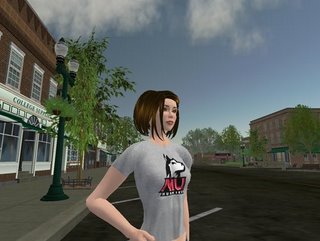
Here's a blog from Ali Andrews, the woman is building the Glidden virtual campus. http://aliandrews.blogspot.com/2006_01_01_aliandrews_archive.html. And here's Ali in Second Life:


I will check these out tomorrow. And perhaps Madeline Lightfoot will have more exciting adventures to report. Ooo - and I just noticed several places to hone my Second Life Skills. Stay tuned.

Guba Guy


Just another juicy bit from this month's Fast Company. 34-year-old Thomas McInerney is CEO and cofounder of Guba, based in San Francisco. Guba won the right to be the first independent company offering downloads of theatrical movies. Now Amazon and Apple have entered the market of first being competitive with the DVD with the hope of eventually eclipsing it.

http://www.fastcompany.com/magazine/110/fast-talk-mcinerney.html
http://www.guba.com/

Thursday, November 16, 2006

Free to Be Media


Fast Company quotes tech reporter Kevin Kelly this week saying in the future all media will be free - we will only pay for functionality and personalization. This in an article about the future of newspapers. http://www.fastcompany.com/resources/innovation/watson/091806.html

Wit, Will and Walls at University of Tennessee

Here in Knoxville, TN this week to pre-pre-premiere the 15-minute version of Wit, Will and Walls to Dr. Cynthia Fleming's graduate class in African American Studies. Dr. Fleming has written extensively on the civil rights movement of the '60s, is the author of Soon We Will Not Cry: The Liberation of Ruby Doris Smith Robinson and was one of the scholars featured in the film. A good class with thoughtful feedback. Here are some of their comments:

"Powerful. This piece is good at presenting the civil rights movement as a broad, multi-dimensional movement."

"Excellent focus on micro, personal story. An amazing source for an amazing account."


"The reenactments were wonderful."


"Show us more storyline, more reenactments, more background."


"It would be good to get the white (students) perspective."


http://www.highlandercenter.org/default.asp

The second half of class was spent at Highlander Research and Education Center in New Market, TN which was and still is a key organization for cultivating social movements in the U.S. Rosa Parks was there planning strategies six months before she was arrested, Dr. Martin Luther King spent time there. Highlander has dealt with coal mining issues, sea island literacy programs, and now has a focus on immigration issues.


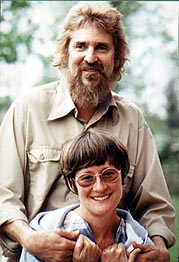
We were fortunate to have been hosted by Guy and Candie Carawan; principals at Highlander, musicians and long-time activists. What a privilege to have walked around the site where such important human rights work has been fostered and to meet this dynamic couple that have been witnesses and catalysts to history.

Thank you, Dr. Fleming.


http://digitalstudio.ucr.edu/studio_projects/carawan/default.html

Life After Princess Leia

Director George Lucas announced recently that he'll be quitting the blockbuster film biz and that the future lies in small films and Web distribution.

At a groundbreaking ceremony for his renamed alma mater, the School of Cinematic Art at University of Southern California, Lucas said spending $100 million on a making a film and another $100 million for marketing makes no sense.

"I think people are going to be drawn to a certain medium in their leisure time and they are going to do it because there is a desire to do it at that particular moment in time, " said Lucas. "Everything is going to be a matter of choice. I think that is going to be a huge revolution in the industry."

That being said, Indiana Jones 4 is still in development and intended to be released on the good old fashioned large screen. "We are not rushing in, we are trying to find out exactly where the monetization is coming from." Amen, brother.

Wednesday, November 15, 2006

High Art on YouTube

NYTimes today does a good job of mining the dark YouTube depths for high art gems...


Ferreting around cyberspace in YouTube can be a bit like going down the rabbit hole, entering a strange, oddly seductive media universe in which normal standards you’d bring to the consumption of culture don’t seem to apply. Why would anyone want to watch some nobodies from Grand Rapids performing “A Chorus Line”? You scoff, and then, possessed by curiosity, outrage or some other impulse, you click.


Sunday, November 12, 2006

Second Life


With the mid-term election over and a flurry of changes and posturing in its aftermath - I want to take a moment to look back at one of the most interesting new media moves by a politician during the entire election season. Former Virginia Governor Mark Warner participated in a simulated interview at Second Life -- a Web site that offers participants the chance to wander around in a simulated world and interact with one another.

Warner created an avatar -- a "virtual" representation of himself -- to appear in the interview.

He went as a tall white man dressed in a suit, not a far stretch from his typical off-line wear. A remarkable difference was that the virtual Warner flew onto the stage to make his remarks -- a feat the real world Warner has yet to pull off (as far as we know).

Asked why he chose to be the first virtual politician, Warner said, "How people communicate and what type of communities they form is changing in real time."

Warner had a career as a technology entreprenuer before he became Governor of Virginia.


Second Life is a 3D online world with a rapidly growing population of over a million residents from 100 countries around the globe. The residents themselves create and build the world. Second Life is created by Linden Lab, a San Francisco-based company founded in 1999 by Philip Rosedale to "create a revolutionary new form of shared 3D experience." The former CTO of RealNetworks, Rosedale pioneered the development of many of today's streaming media technologies, including RealVideo.


Second Life has been on the cover of Business Week, on the front page of the New York Times Escapes section and in the coverage of Reuters, which has now assigned a reporter to operate full-time inside Second Life.


http://lindenlab.com/news

Basic memberships for Second Life are free. Reporters can create a free account online at https://secondlife.com/join/. To enter into the world, download the necessary software at https://secondlife.com/community/downloads.php.

I just joined Second Life where I can own land, start my own business and trade in commerce with currency known as Linden dollars. My name there? Madeline Lightfoot -as of now my avatar is an urban black male. (All of the women pre-fab Avatars look like low-life Barbies).

I will keep you updated on my new, Second Life.

CNN talks about more than 60 universities setting up a presence on Second Life http://www.cnn.com/2006/TECH/11/13/second.life.university/index.html


Business Week talks about CEO's hanging out on Second Life http://www.businessweek.com/magazine/content/06_47/b4010068.htm

News from Second Life http://nwn.blogs.com

Friday, November 10, 2006

Chicks n' Flicks

Some like-minded persons from the West Coast:


http://www.womedia.org

Based in San Francisco, Women's Educational Media (WEM) is a highly acclaimed progressive social issue documentary film production company and a leader in the field of anti-bias education. WEM's primary current focus is its Respect for All Project, a series of highly successful campaigns designed to address issues of prejudice among young people and the adults who guide their development.

Through the distribution of award-winning films, accompanying curricula, and a training program aimed at educators, youth service providers and parents, the project strives to create safe schools and communities by opening up dialogue about diversity and discrimination.

Tuesday, October 31, 2006

Welcome to the Revolution


Grrrrrrrreat New York Times article today about the purchasing power of women. Stunning statistics and comprehensive coverage of the feminine world of financial acumen.

The reporter buried the most stunning statistic of all (which I heard before, but forgot because it was... well - so STUNNING): According to the National Association of Realtors single women are the fastest growing segment of home buyers purchasing 21 percent of homes, compared with just 9 percent for single men.

Market researchers are now embracing women as much more than domestic divas. They recognize them as buyers with their own careers and fattened pocketbooks, who are finding plenty to do and plenty to buy outside the home.

The article is chock full of other great statistics; the Canadian developer Shane Homes states that women control 80 percent of every consumer dollar spent. They call that the 80 Percent Minority.

Also interesting websites to check out:

www.bostongalsopenwallet.blogspot.com - tracks "Jane Dough's" finances and her financial decision making every month "because speaking publicly about your personal finances was a no-no in my family" says Dough. She feels by blogging about it - she can find enlightenment in managing her $461,435.59 (in October) of assets.

Of course there is BeJane.com the early bird on-line community for women into home improvement.

More companies, in the United States and elsewhere, have realized that they overlook women at their own financial peril. The companies are realigning their marketing and design practices, learning to court an increasingly female-centric consumer base that boasts more financial muscle and purchasing independence than ever before.

“We are perhaps on the first step to a matriarchal society; women will earn more money than men if current trends continue by 2028,” said Michael J. Silverstein of the Boston Consulting Group. “The trend has been escalating in the last 10 years as there has been a gradual, slow erosion of the power balance in the family, a psychic rebalancing.”

Women, Mr. Silverstein added, are “controlling purchases and driving a shift in our economy.”

http://www.nytimes.com/2006/10/29/business/yourmoney/29women.html?pagewanted=1&ei=5087%0A&em&en=45d6f45322e53acc&ex=1162443600&adxnnl=0&adxnnlx=1162335757-KM9CW2FtPeiQDWRw4i2lfA

More Reasons to Love Chicago

Colombia College of Chicago's Frequency TV recently became the first college television station to offer entertainment programming as Podcasts through the iTunes Music Store, says the online edition of the Colombia Chronicle.

http://www.columbiachronicle.com/paper/campus.php?id=1895


Their original sketch comedy program called Out on a Limb has been streaming to more than 1,1oo subscribers from all over the world since October 28th, with 100 t0 200 new subscribers each day. As of Nov. 10, six more shows become available for download. It's free to download - which still begs my nagging, nagging banal question - how do we make money in this new era?! Gosh.

Frequency TV programming can be found on iTunes by searching for ?artist Frequency TV.?

Sunday, October 29, 2006

The Devil and Daniel Johnston

Daniel Johnston is a manic-depressive genius singer/songwriter/artist, revealed in this portrait of madness, creativity and love.The Devil and Daniel Johnston is a stunning portrait of a musical and artistic genius who nearly slipped away.

Director Jeff Feuerzeig exquisitely depicts a perfect example of brilliance and madness going hand in hand with subject Daniel Johnston. As an artist suffering from manic depression with delusions of grandeur, Daniel Johnston's wild fluctuations, numerous downward spirals, and periodic respites are exposed in this deeply moving documentary.


http://www.sonyclassics.com/devilanddaniel/aboutthefilm.html


http://www.austinchronicle.com/issues/vol18/issue51/music.johnston.html

Saturday, October 14, 2006

Proving the Impossible


"He proved the impossible: that the poor were bankable."JONATHAN J. MORDUCH, an economics professor at New York University, on Muhammad Yunus, who won the Nobel Peace Prize for pioneering work in giving tiny loans to millions of poor people.

Encouraging news that the 66-year-old Bangladeshi economist Muhammad Yunus won the Nobel Peace Prize yesterday for his pioneering work in giving small, even tiny loans to millions of poor people no bank would touch. By empowering destitute widows, abandoned wives, landless laborers and rickshaw drivers, sweepers and beggers, Yunus has made great strides in combating rural poverty in his own country and inspiring similar programs across the developing world.

“Microcredit has proved to be an important liberating force in societies where women in particular have to struggle against repressive social and economic conditions,” the committee said in announcing the prize.

Mr. Yunus has long been an influential champion of the idea that even the most impoverished people have the drive and creativity to build small businesses with loans as small as $12, and Grameen Bank has dedicated itself to helping the poorest of the poor.

Go Mr. Yunus.

http://www.nytimes.com/2006/10/14/world/asia/14nobel.html?_r=1&th&emc=th&oref=slogin

Thursday, October 12, 2006

Wit, Will and Walls in Loudon Times-Mirror

Speaking your mind
By Betsy Allen
10/11/2006

Put yourself in Betty Kilby Fisher's place: a teenager living in Virginia 50 years ago -- trying to do well in school, make friends, fit in.

Now, imagine you are thrown into a situation where your mere presence drives students from the school's doors. Picture yourself as a source of turmoil and target for some of the worst kinds of ugliness human beings can conjure.

Could you endure?Tanesia Fisher, 16, a junior at Stone Bridge High School, doesn't think so."I probably wouldn't have been as strong as her. I couldn't have handled it."

Tanesia is the granddaughter of Betty Kilby Fisher. And this was the situation Fisher found herself in during the late 1950s, when she was a 13-year-old living in Warren County.Dismayed by widespread segregation practices, Betty's father, James Kilby, decided to draw the line with his own daughter.

He filed a case in Betty's name to force the integration of Warren County High School. Ordered by federal courts to end segregation, Virginia balked; instead, the governor ordered the closing of that school, along with others in the state, as part of a policy of Massive Resistance.

Eventually, Virginia's Supreme Court ruled that policy unconstitutional and the schools reopened, but the white students stayed away. For months, Betty and a handful of other black teenagers walked the quiet halls at Warren County High School.Over time, white students returned - some with a vengeance. Betty was emotionally, verbally and physically abused, and resulting trauma has stayed with her throughout her life.

People may not "understand the price that we paid to get an education," said Betty, 61, who now lives in Euless, Texas.

"That's the way you take someone's power away," said Paulette Moore, a documentary film director associated with Shenandoah University in Winchester. Moore is producing a film about Betty and the events of 50 years ago.

"[Betty] didn't tell anyone what happened," said Moore. "If young girls told their families, they would have to go and defend their honor. People could get killed."

In 2002, Betty shared her experiences in a book, "Wit, Will and Walls.""When I first wrote my book, I had an image of young people reading the book," said Betty. "There were things I didn't want to put in. But if I cut and pasted pieces, it wouldn't be a real story. I thought, if I am going to touch people, it will be with the raw truth."


Moore found Betty's story deeply compelling, and an ideal subject for a documentary film. When it came to casting the film, Betty felt strongly that her granddaughter Tanesia could play an important role - that of Betty herself.

Tanesia is thoughtful and direct when asked about her grandmother's experiences and her decision to be part of the film.

"I've always been really close to my grandmother. I knew some of the story," said Tanesia. "But I didn't know all the stuff she had to go through. When I read the book, I was surprised. I was kind of hesitant about the whole acting thing ... showing so much emotion, but I didn't want to disappoint my grandmother. It means a lot to her."

A four-day shoot in mid-August took the film production crew and cast to locations around Clarke and Warren counties to re-enact key events in the story. Moore now is seeking additional funding to undertake a second phase of the documentary production. She has a target completion date of 2008, 50 years after the original case was filed.

The director is constructing the historically based film in a way that young people today can relate to, with limited black-and-white footage - "the events took place in vivid color" - and contemporary music instead of gospel or march songs.

She feels there is an important message here.

"You don't have to be Betty Kilby Fisher to make a change. It's not alchemy," said Moore. "It starts with just speaking your mind."

That's something Tanesia does well. She realizes there are people who honor the legacy of her grandmother - and those who don't.

"You can't force people to appreciate it," said Tanesia. "No one changes just because of one decision someone makes. Racism is still everywhere. It's still in school. Most people are in denial." But she adds, "If you reach out to the younger kids, they'll realize that what they have now is something to be grateful for."

What Tanesia has now are some specific goals. She wants to go to college, earn a business degree and open a seaside resort hotel in her mother's native country, the Philippines.A grand dream, perhaps, for any high schooler - but one that seems in reach. And for that we can thank, in large part, people like Betty Kilby Fisher, who gained their own beachheads in Virginia's civil rights movement half a century ago.

Friday, September 29, 2006

What the Bleep?!

It only took me two years to view the mind-bending film What the Bleep Do We Know? which combines the laws quantum physics with spirituality. Watching it last night was very timely - just the day before I had a conversation with young Winchester filmmaker Kevin Matheson about how his thoughtful film about his addictive brother may have brought about a long term change in his brother's behavior.

What the Bleep? explains that electrons can behave either as particles or as waves - and it depends on whether they are being observed or not. The Bleep filmmakers contend that being that we are made up of electrons, our mere observation in our life, and the way we observe it can change our reality - much like those crazy electrons. Whoa. I love it. Especially being a filmmaker who observes for a living. And I think so many other people love it because it feels inherently true.

The film gets a bit kum bah ya at the end - a little too much triumph of the human spirit for my snarky liking, but overall, it is great brain yoga.

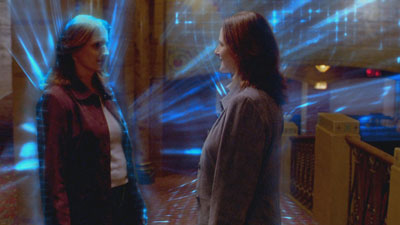
It's part documentary/part drama with Marley Matlin as a cranky photographer having an existential experience.

http://www.whatthebleep.com

Critics hate the film BTW. Which has made it a marketing phenomenon. Quantum Physicist Mr. Porteno is suspicious but not completely damning.

Saturday, September 23, 2006

Inanimate Hostility

This from my friend Dr. Deborah Lee - finally! A scientific explanation for why your computer crashes and all of your memory disappears from your hard drives only when you are careening toward deadline with no room for error.

Resistentialism (ri-zis-TEN-shul-iz-um) noun The theory that inanimate objects demonstrate hostile behavior against us.[Coined by humorist Paul Jennings as a blend of the Latin res (thing)+ French resister (to resist) + existentialism (a kind of philosophy).]If you ever get a feeling that the photocopy machine can sense when you'retense, short of time, need a document copied before an important meeting,and right then it decides to take a break, you're not alone. Now you know the word for it.

Here's a report of scientific experiments confirming the validity of this theory:https://mail.su.edu/exchweb/bin/redir.asp?URL=http://www.uefap.co.uk/writing/exercise/report/clatri.htm

Saturday, September 16, 2006

What a Woman!

We lost a truly grand person this week with the death of 73-year-old saucy/smart former Texas governor Ann Richards. As a young reporter, I watched her, awestruck, from the floor of the 1988 Democratic Convention in Atlanta as she delivered a rousing speech with a few of her famous salvos, one for pappy George Bush:

"Poor George, he can't help it. He was born with a silver foot in his mouth!"

And in keeping with her dedication to push for the rights of all minorities - this good perspective on the talents of women:

"Ginger Rogers did the same thing that Fred Astaire did... she just did it backwards and in high heels!"

Here is the NYTimes obit:

http://www.nytimes.com/2006/09/14/us/15richardscnd.html?ex=1159070400&en=b97d44acd85fdace&ei=5070&emc=eta1

And more hilarious quotes from the guv:

(On ineffective government programs) "You can put lipstick and earrings on a hog and call it Monique, but it's still a pig.''

"A woman's place is in the dome."

"I've always said that in politics, your enemies can't hurt you, but your friends will kill you."

Asked once what she might have done differently had she known she was going to be a one-term governor, Richards grinned. "Oh, I would probably have raised more hell."

"Let me tell you that I am the only child of a very rough-talking father. So don't be embarrassed about your language. I've either heard it or I can top it."

"I get a lot of cracks about my hair, mostly from men who don't have any."